

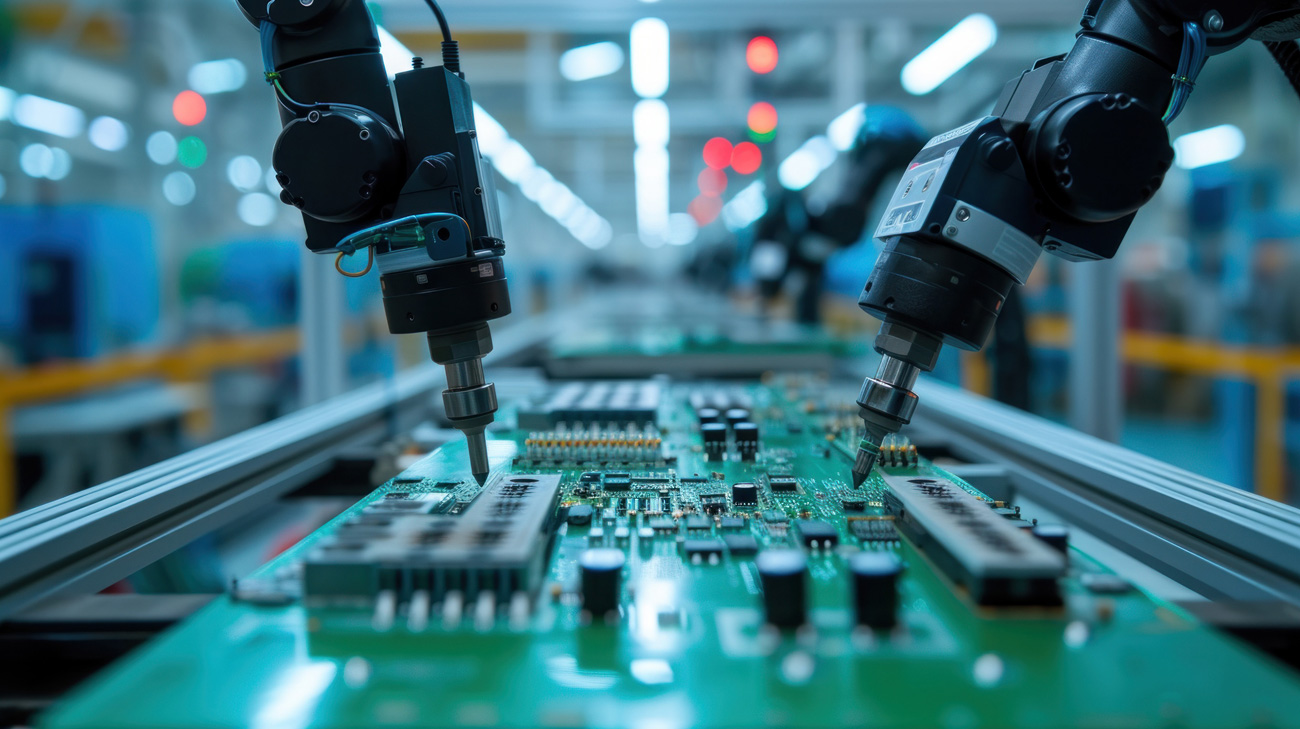
Design for Manufacturability (DFM) can play a significant role in bringing reliable, cost efficient new products to market. When it comes to PCB design and electronic assembly, DFM considerations can ensure a board can be built, assembled, and tested smoothly—without surprises or last minute redesigns. By considering manufacturing constraints early, companies can cut down on rework, improve yields, and shorten time-to-market timelines. The real key to effective DFM isn’t just technical know how—it’s strong collaboration between engineering, manufacturing, and supply teams.
DFM in Electronics and PCB Manufacturing
For PCB designers and assembly teams, DFM centers on aligning product design with manufacturing capabilities, such as PCB trace width and spacing, component placement, via choices, solder mask openings, panel layouts, and inspection accessibility. Ignoring these factors can lead to assembly challenges, defects, or otherwise, unnecessary downstream engineering change orders..
Good DFM encourages designers to simplify as much as possible, features such as standardized part footprints, fewer overly complex features, and components that are widely available and manufacturing friendly. Small changes can have a big impact. For example, increasing spacing around fine pitch components can improve soldering yield and prevent defects such as bridging or tombstoning. Choosing standard layer counts and well defined PCB layer stack-ups helps fabricators maintain controlled impedance and produce more consistent boards at a lower cost.
Considerations like these become even more important when moving from the prototype to mass production stage. Otherwise, a board that performs well in small batches may run into yield or reliability issues at volume manufacturing scale, if such issues aren’t addressed in advance. Use DFM tools to help ensure designs are stable, repeatable, and ready for high volume production.
Collaboration
While design engineers generally initiate DFM work, it’s the cross-team collaboration that ultimately determines success. PCB designers, manufacturing engineers, quality teams, test engineers, and procurement specialists each bring essential insight into how a design will perform once it hits production.
Involving all key roles in the conversation early allows design choices to be checked against real fabrication tolerances, assembly capabilities, and testing requirements. For example, a designer might select a fine pitch component that meets electrical needs but is difficult for the assembly team to solder reliably. Input from manufacturing might lead to selecting a different component or adjusting the layout, improving both performance and manufacturability.
Procurement teams also play an important role by identifying part availability risks, lifecycle concerns, and lead time challenges. A part that looks perfect on paper may slow down production if it’s hard to source or nearing end of life.
Supplier Involvement
Your PCB fabricators and EMS partners are invaluable resources in the DFM process. They understand the practical limitations—routing rules, drill tolerances, panelization strategies, solder paste requirements, inspection methods—and can help shape a design so it fits smoothly into their manufacturing workflow.
Engaging suppliers early helps prevent unnecessary back and forth during production. When the design aligns with capabilities, there are fewer questions, delays, and a much higher chance of first pass success. Strong partnerships also create a feedback loop to improve future designs and product launches.
Benefits of Collaboration
When DFM is integrated into the earliest design stages—and when teams communicate well, benefits are clear for volume manufacturing:
• Lower manufacturing costs from fewer design iterations and reduced rework
• Faster time to market by catching issues before they impact production
• Increased product quality and reliability thanks to fewer defects and more consistent processes
• Stronger innovation because teams can push performance limits while still designing for manufacturability
Conclusion
In electronics and PCB manufacturing, DFM isn’t just a final checklist item—it should be a collaborative strategy to guide the entire design process from the start. When engineers, manufacturers, suppliers, and procurement teams work together, organizations can reduce risk, improve yields, and get high quality products to market faster. In an industry driven by rapid innovation and tight margins, collaborative DFM is essential to staying competitive and building products that perform reliably.