

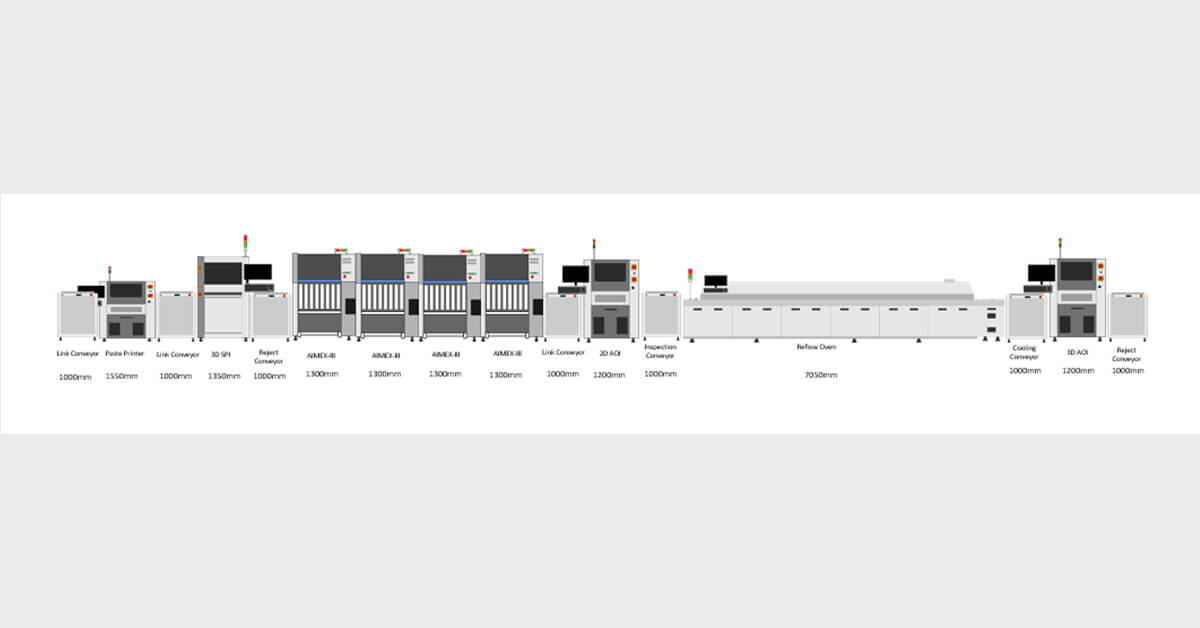
A mega integrated Surface Mount Technology (SMT) assembly line is a highly automated and efficient system used for mass-producing electronic circuit boards. Here’s a description of the key components and processes involved:
Key Components of an SMT Assembly Line
1. Solder Paste Printer:
- Applies solder paste to the PCB through a stencil, ensuring precise placement on the pads where components will be mounted.
2. Pick-and-Place Machine:
- Uses robotic arms to pick components from feeders and place them accurately on the PCB. These machines can handle thousands of components per hour with high precision.
3. Reflow Oven:
- Heats the PCB to melt the solder paste, creating strong electrical and mechanical bonds between the components and the board.
4. Automated Optical Inspection (AOI):
- Inspects the assembled PCBs for defects such as misaligned components, solder bridges, and missing parts using high-resolution cameras and image processing software.
5. Conveyor Systems:
- Transport PCBs between different stages of the assembly process, ensuring smooth and efficient workflow.
6. Solder Paste Inspection (SPI):
- Checks the quality of the solder paste application to ensure it meets the required standards before components are placed.
7. X-Ray Inspection:
- Used for inspecting hidden solder joints, such as those under Ball Grid Array (BGA) components, to detect defects that are not visible to the naked eye.
8. In-Circuit Testing (ICT):
- Tests the electrical performance of the assembled PCB to ensure all components are functioning correctly.
Process Flow of an SMT Assembly Line
1. Material Preparation and Inspection:
- Components and PCBs are inspected and prepared for assembly.
2. Solder Paste Printing:
- Solder paste is applied to the PCB.
3. Component Placement:
- Components are placed on the PCB by the pick-and-place machine.
4. Reflow Soldering:
- The PCB is heated in the reflow oven to solder the components in place.
5. Automated Optical Inspection (AOI):
- The assembled PCB is inspected for defects.
6. X-Ray Inspection (if needed):
- Hidden solder joints are inspected.
7. In-Circuit Testing (ICT):
- The electrical performance of the PCB is tested.
8. Final Inspection and Quality Control:
- The finished PCB undergoes a final inspection to ensure it meets all quality standards.
Visual Representation
You can visualize a mega integrated SMT assembly line as a series of interconnected machines and conveyors, each performing a specific task in the assembly process. Here’s a simplified diagram to help you picture it:
Material Preparation -> Solder Paste Printer -> Pick-and-Place Machine -> Reflow Oven -> AOI -> X-Ray Inspection -> ICT -> Final Inspection
This streamlined process allows for high-volume, high-precision manufacturing of electronic circuit boards, making it essential for producing modern electronics efficiently and reliably.